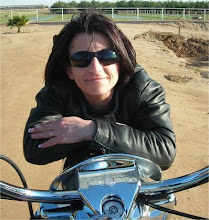
Remember my post back in April, about The Cherylann of the Hotel Jeffrey Benefit? Well Cherylann posted this comment to me October 14th and I decided to post it.
Sheila & Friends,What a pleasure running across your site!Thank-you sooo much for being a part of the benefit run that my friends put on in April. What an amazing day filled with soooo many familiar faces and...some new ones. Guests who have frequented our saloon & grill and stayed in our hotel since we bought it in 2003, all coming out in force to let us know that they care and that they are here to help us through this difficult time!The day was beautiful and the turn-out was beyond belief! I had just gotten out of the hospital and didn't have much energy, so I wasn't able to make it around to see every person individually, but many of the people there came over and gave me hugs. It turns out that while I was in the park with what I thought was everyone...our saloon and hotel were equally as full of people that were there for me as well!I was very touched by the whole event, which of course, was kept a secret from me until the last minute. I still cry when I think about how everyone came together for us, it means sooo much and of course, as we all know, insurance doesn't cover everything, so the donations were greatly appreciated as well.This has been quite a journey, I was diagnosed in January with a rare Cancer, Tonsil Cancer that was moving into the Base of the Tongue, and 10 months later I am still going through so many ups & downs/good days & bad days, that I am never sure if I am coming or going. Most of the ups & downs are what I call "Radiation Fall-out", they are simply the long term effects of the treatments, on my system! They are the things that I have to get used to living with now, and I'm a survivor so I will!Because the Cancer was fast growing, it was a very aggressive treatment program that I went through, and I was fortunate enough to have been referred to a specialist in this particular Cancer, Dr. Luu at the Stanford Emmanuel Oncology Center in Turlock. An amazing place with wonderful people who really care! They treat each patient as though they are a dear family member, whom they would not want to lose.I hope that you don't mind if I share with you a few things that I have learned through this experience: Cards, pictures, e-mails, prayers and good thoughts, do make a huge difference in the day of a person battling any illness!18 hours of work a day is NOT healthy!Rest is crucial to healing!Listen to your body!Family & friends are most important, spend as much time as you can with them!Work will always be there!It's OK to delegate!And...of course, smiling is healthy and it is very important to keep a good sense of humor through it all! I still can't eat enough to stay alive so I spend many hours connected to a feeding machine whom I lovingly refer to as R2D2. I don't have enough energy yet to be there very often, plus my system is still so compromised that I have to be very careful not to catch anything, so I book all of the rooms and respond to e-mails from home, and of course would love to hear from you. If you come by the hotel or saloon to say hi, and you don't see me...please leave a note for me, it's almost as good as a hug!Again, Sheila & Friends...Thank-You!Sincerely,CherylannCherylann@HotelJefferyGold.comThe Historic Hotel Jeffery
Thursday, October 15, 2009


Thursday, September 17, 2009
Inspired
Alright boys & girls, we're gonna take a brief break from our 'history lesson' that seems to have been the theme here. I've been known to stray from the original subject, so bear with me on this one, as I am writing from the heart and off the cuff!
This post is also something I thought I would never do, as this blog pertains to motorcycle riding, and the things that surround it. (Don't worry, I'm weaving that in later!) I also want you to know that this is on a personal level, which I had planned to try and keep a little on the private side,but life has many twists and turns as you are about see!
I have 3 children, (if you didn't already know) 2 boys & 1 girl-24, 22, & soon-to-be 21!
In 1987 I was only 21 when I had my 2nd son, Mark. He was born with Down Syndrome (Trisomy 21). Which means he has an extra chromosone in the 21st set. (For those of you who don't know-we have 46 chromosones-23 from each parent-which equals into 23 pairs!)
He was also born with one lung, (the right one), which also came with a few other problems which required a few surgeries. Some of which were rarely done at the time, so we spent the first 6 years of his life in & out of U.C.S.F. Medical Center. His lung has grown enough to encompass the cavity for the loss of the left one, which is incredible!


(I had to take pics of old pics-sorry!)


 He has graduated all classes needed and we are researching other recources available that provide more schooling and social outtings.
This post is also something I thought I would never do, as this blog pertains to motorcycle riding, and the things that surround it. (Don't worry, I'm weaving that in later!) I also want you to know that this is on a personal level, which I had planned to try and keep a little on the private side,but life has many twists and turns as you are about see!
I have 3 children, (if you didn't already know) 2 boys & 1 girl-24, 22, & soon-to-be 21!
In 1987 I was only 21 when I had my 2nd son, Mark. He was born with Down Syndrome (Trisomy 21). Which means he has an extra chromosone in the 21st set. (For those of you who don't know-we have 46 chromosones-23 from each parent-which equals into 23 pairs!)
He was also born with one lung, (the right one), which also came with a few other problems which required a few surgeries. Some of which were rarely done at the time, so we spent the first 6 years of his life in & out of U.C.S.F. Medical Center. His lung has grown enough to encompass the cavity for the loss of the left one, which is incredible!


(I had to take pics of old pics-sorry!)
I can sit here all day and go into detail, but that's not the point of this post!
Why am I telling you this, and what is the point? Because he has truly been a 'gift', 'a blessing in disguise', and has touched many lives. Anyone & everyone who has ever came into his/our life, is going away never forgetting what an impact he has made on them, (trust me!)


Another reason for this post, is I came across a blog called Days with Dylan which made my jaw drop! Her name is Laurie who's 2nd child was born with Down Syndrome! Now this brings me to this point; she is blogging about her life, his life, and how they are dealing with this. I wish I had the technology & the knowledge of today when I had Mark. I felt alone, scared, and into the unkown. (It's only been 22 yrs.) but technology and doctors have come a long way since.
So I feel compelled to want to 'help' her in some way, but some things are left to 'Life' itself, and I can only give her words of encouragement. In some unkown way, I have been inspired to write about Mark because of her, and my heart tells me to share this....why? I don't know, but I'm doing it! (The Man upstairs works in mysterious ways).
Mark is the highlight of our lives, he has a great sense of humor and keeps us on our toes! Sometimes we reflect on what would be if he didn't have Down Syndrome,but that's a subject that is short-lived!

 He has graduated all classes needed and we are researching other recources available that provide more schooling and social outtings.
On that note-he has taken an interest in taking rides with Dad! Don't worry, he hangs on encredibly well! (My husband says he leans on him pretty good!)


 I told you I would tie in the motorcycle! We've actually thought about a side-car now!


 I told you I would tie in the motorcycle! We've actually thought about a side-car now!
I know I have probably left you with un-answered questions, and why I choose to blog about motorcycles instead of other things. After life hands hands you a full deck, you learn how to deal...
If you have any questions, feel free to e-mail me at smbikermomma@gmail.com I will be more than happy to answer!
Until the next time.....Happy Trails my friends!
Wednesday, August 5, 2009
The Sierra Gold Country Series: Jackson (5 of 5)
View Larger Map
Usually a map is placed at the beginning, but I chose to place it at the end so that each destination wasn't revealed. It was only 153 miles round trip, but it was still fun and well worth it!
 Jackson has a 1,217 elevation and approximately 4,317 population.
Jackson, named after Colonel Alden Jackson, was founded in 1848 around a year-round spring. Settlement of the region by American pioneers was stimulated by the discovery of gold in the Sierra foothills around 1848. The settlement was named for a local lawyer who was liked by miners named Alden Appola Moore Jackson. Although Amador County was an important mining center, its County seat of Jackson was not typical of the early gold camps. The camp grew quickly, besides being a popular mining spot, it was also a convenient stopping place on the road from Sacramento to the Southern Mines. The camp became an important supply and transportation center for the neighboring towns, and by 1850 the population had reached an estimated 1,500. Jackson grew first as a watering hole for cattle, then as one of the earliest and most durable of the Mother Lode's hardrock mining areas.
In 1853, Jackson became the county seat of newly formed Amador County, California. Previously, from 1851-1852, it had been the county seat of Calaveras County. Jackson may therefore be the only city to have ever been county seat of two different counties at different times.
Placer mining gave out by the 1860s, replaced by hard rock mining. One of the town's most prominent historical landmarks, the Kennedy Mine, began operation in 1860; at the time of its closure during World War II in 1942, it was the deepest gold mine in North America, at 1802 meters; (5912 ft). On August 27, 1922 47 miners became trapped when a fire broke out in the Argonaut mine. All 47 men died in the fire but it wasn't until over a year later that the last body was recovered. The Argonaut mine incident was the worst gold mine disaster in US history.
In Oct, 1942 the US government passed the War Production Board Limitation Order which signaled the demise of gold mining in California. The government needed men for the war and gold was not considered a strategic war metal.

Inscription: In 1848, was a village of huts and tents called
"BOTTILEAS”
by the Mexicans from the bottles strewn about by those who tarried here.
In 1849, it was named
JACKSON
for Colonel Jackson an early day resident.
In 1853, Amador County was carved out of
Calaveras County and Jackson
became its County Seat.
In 1886, The Order of
NATIVE DAUGHTERS OF THE GOLDEN WEST
was founded here and to commemorate
the semi-centennial year of the order
this monument is erected and dedicated. I have a little dilemma with this photo, so let me explain. The day I took this pic, it was boarded up. Why? Well some people said it wasn't up to code which makes me sad, because we have always stopped here en route to another destination, to have a cool beverage or two.
 Besides that, I could not find any historical information on this building at all! I'm a little bewildered and saddened! But hopefully it will re-open someday soon, and I can find out excactly what I want to know.
 This is what the building looks like from another view.
This is the side view of the Wells Fargo Building. Inscription: Wells Fargo Building
First structure on site built in 1857. Bar portion of building erected in 1856 as Drug Store. Wells Fargo Express Agency moved to store briefly in 1887. Two story section built in 1858, used as a General Store. Easterly one story section built in 1898. Wells Fargo Express located next door 1884-1919.
Ginocchio family owned building from 1857 until sold to present owners. Dan Vukajlovich and Jim Smallfield opened Wells Fargo Club in 1955 and purchased building in 1965.
Dedicated by the Native Sons of the Golden West March 12, 1983.
Joseph Ursino Grand President- In Memory of James Phelan, U.S. Senator
 These pics are looking North, opposite The National Hotel.
(I have very little history on this town besides what I wrote at the beginning of this post.)
This town is a great stop on the way out to Tahoe, (if you take the back roads) which we have done previously. Up the road a bit, is Jackson Rancheria Casino & Hotel. We like to take a trip up there once in awhile, as it's always a great ride.


 Well it's time to head back home, as we made a day of it! Thank you for coming along with me to The Sierra Gold Country. I've learned a great deal along the way and enjoyed sharing it with you. Until then...............ride safe!
Thursday, July 9, 2009
The Sierra Gold Country Series: Angels Camp (4 of 5)
 As we crossed the bridge of New Melones Lake, we decided to stop and take a few pics.
 "Robinson's Ferry"
State Registered Landmark No. 276
In 1848 John W. Robinson and Stephen Mead established ferry transport for freight, animals and persons across river. In 1856 Harvey Wood purchased interest and later acquired property which was maintained by Wood family until 1911. Charges were 50 cents for each passenger, horse, Jenny, or other animal.


Angels Camp, "Home of the Jumping Frog" has an elevation of 1,378 feet and a population of approximately 3,589


Angels Camp was founded by Henry Angels in 1848. (The sign says George, but other references say Henry!) He was a shopkeeper from Rhode Island, who found it to be more profitable to set up a trading post than to dig for gold.
Angels City is the town's official name
This town gathered it's share of gold before settlers started moving on. One local resident decided to write a short story called, 'The Celebrated Jumping Frog of Calaveras County' in 1865. That writer was Mark Twain, who has somehow linked frogs and Angels Camp together forever!


 Angels Camp is full of history, antique shops, restaurants and yes, it's own theater, The Angels 5 Theatre.
 The Angels Hotel was erected in 1851, only to be replaced by a one-story wooden structure. In 1855 it was replaced with stone, and a second story was added in 1857.

The Altaville Grammar School was built in 1858 with brick, and was used as a classroom until 1950. It is still known as one of the oldest in California.
 At the Angels Camp Museum you can get your fill of history and take a stroll through the past. They have plenty of outdoor artifacts that surround the grounds, such as two steam traction engines and a Pelton water wheel accompanied by it's generator.
Inside hosts a wide collection of carriages and wagons which were used as a form of transportation. They also have a wide variety of quarts stone and gold!

Around the 3rd week in May, the people of Angels Camp turn the Calaveras County Fairgrounds into 'Frogtown'. They have the fair and The Jumping Frog jubilee at the 80 acre facility, and is held for 4 days. The Jubilee starts with a children's parade in downtown Angels Camp and ends with a Destruction Derby on Sunday evening.


 Well we're off to the next town, hope to see you there....
Wednesday, June 17, 2009
The Sierra Gold Country Series: Columbia State Historic Park (3 of 5)
This town is one of my all time favorites! I am only able to give you a portion of what Columbia has to offer. If you ever take the trip to The Sierra Gold Country, please make this town a 'must~see'!
 In 1852 this building was an operating saloon until the fire of 1854. It was rebuilt, and resumed business as both a saloon and restaurant, until the fire in 1857. It was again restored and changed owners many times up until the late 1800's. It remained vacant until the state purchased it in 1947, and was made into a blacksmith shop. In 1998 it was rebuilt and purchased by Leannha Rhodes Parrott, she names it "Parrott's Blacksmithing" which she still owns and operates to this day.

 This building is the only structure that is neither original or a reproduction of an original! It was used in a pilot for a T.V. series, called 'The Young Riders.' (I did not know this!)

 After the company was finished filming, they decided it would be too expensive to take it down, so they donated it to the park. The park administration weighed the negative of a non-historical building, but found it being of positive nature by storing and diplaying artifacts.

 The Columbia Museum, (also known as the Knapp Building) was owned by Sewell Knapp from 1853 until 1887, and was a general store. In late 1887, Knapp turns the business over to his son, who keeps it for a short time. It changed owners and was ran as a sandwich & ice cream shop, until 1948 when it became a museum. It becomes the Cavalier Museum in 1958 and was restored in 2002, then re-opened in 2003.

 The museum houses many artifacts, and is full of information on the history of Columbia.


 The first Chinese immigrants flooded San Francisco during the gold rush in 1849. They headed East, and Columbia housed as many as 2,000 at one time. They brought with them new foods, herbs, and spices, which was a delightful change to the 'bland' American food of the time.
 Columbia State Historical Park is located in Tuolmne County, a few miles north of Sonora. Its elevation is 2,139 and a population of approx. 2,000.
 On March 27,1850, Dr.Thaddeus Hildreth, with his brother George and a handful of prospectors, made camp near here. In their search for gold, they panned the nearby gulch near Kennebec Hill, and gold they found! Within weeks, several thousand miners had made way and set up camp, that was known as Hildreth's Diggins. That name was changed to 'American Camp', which again was changed to Columbia.
Hildreth's Diggins is actually an annual event now named Columbia Diggins. Where you are taken back in time, to observe how they prepared their meals, made their own clothing, and cared for livestock.
Columbia has really never been deserted. It has thrived with people continuosly through out time. The walkways are wooden, and the streets are dirt ridden. It really is like taking a step back in time.
 The Matelot Gulch Mine Supply Store offers kitchenwares, minerals, silver and relics, as well as mining supplies. If you would like to learn to pan for gold, this is the place to start!
 The Wells Fargo Co. Express building was once The American Hotel, which housed an office to Henry Wells and William Fargo. In 1857 the Hotel burns in a fire, and was rebuilt by Wells, Fargo & Co with wood, which was replaced with brick in 1858. In 1945, the deed was gifted to the state by Wells & Fargo.
The building is kept in historic fashion and is on display daily. It is the 'trademark' of the town and has been used in many western movies. Stage coach rides run daily, from Memorial Day through Labor Day.

In 1851 it was known as the Columbia Market. Over the next few years, it under-went several different owners, and burned in 1854 and in 1857. It was rebuilt with brick in 1857 and rented out to John B. Douglass, who ran a very popular saloon with an aviary, paintings, fish, geological display and is also a stage depot.Over the next 110 yrs. it was owned by many people who ran different businesses from it. In 1968 it closed for restoration, and was re-opened as the Jack Douglass Saloon. It is one of the oldest saloons in the west and is currently operated by Pat Narry and Mike Keene.

As you walk back in time here, there is Nelson's Candy Kitchen, which has been turning out confections since the early 1800's. A Danish miner, C. Rex Nelson became the confectioner in 1930, and after 4 generations, are still producing fine candies from the original recipes.
 In 1852 this building was an operating saloon until the fire of 1854. It was rebuilt, and resumed business as both a saloon and restaurant, until the fire in 1857. It was again restored and changed owners many times up until the late 1800's. It remained vacant until the state purchased it in 1947, and was made into a blacksmith shop. In 1998 it was rebuilt and purchased by Leannha Rhodes Parrott, she names it "Parrott's Blacksmithing" which she still owns and operates to this day.

 This building is the only structure that is neither original or a reproduction of an original! It was used in a pilot for a T.V. series, called 'The Young Riders.' (I did not know this!)

 After the company was finished filming, they decided it would be too expensive to take it down, so they donated it to the park. The park administration weighed the negative of a non-historical building, but found it being of positive nature by storing and diplaying artifacts.

 The Columbia Museum, (also known as the Knapp Building) was owned by Sewell Knapp from 1853 until 1887, and was a general store. In late 1887, Knapp turns the business over to his son, who keeps it for a short time. It changed owners and was ran as a sandwich & ice cream shop, until 1948 when it became a museum. It becomes the Cavalier Museum in 1958 and was restored in 2002, then re-opened in 2003.

 The museum houses many artifacts, and is full of information on the history of Columbia.


 The first Chinese immigrants flooded San Francisco during the gold rush in 1849. They headed East, and Columbia housed as many as 2,000 at one time. They brought with them new foods, herbs, and spices, which was a delightful change to the 'bland' American food of the time.
They ran laundry shops, opium houses, and mined their share of gold. They were ran out in 1857, only to return in 1858. There was turmoil and fires through-out the years, which eventually dwindled the immigrants.

 This exhibit was originally run as a bakery from 1854 until 1958, when it became a Chinese herb exhibit. It was restored between 2002 & 2007 and is now on display.

 In 1876, James Wilson began building residence on the lot until his death in 1878. Mrs. Rose Wilson finished building and resided there with her family until the 1930's. It was restored between 1940-1941, then in 1952 was used in the movie High Noon.

 This exhibit was originally run as a bakery from 1854 until 1958, when it became a Chinese herb exhibit. It was restored between 2002 & 2007 and is now on display.

 In 1876, James Wilson began building residence on the lot until his death in 1878. Mrs. Rose Wilson finished building and resided there with her family until the 1930's. It was restored between 1940-1941, then in 1952 was used in the movie High Noon.
 It was then purchased from the McConnell family by the state in 2005.
Mrs. Geraldine Lucille McConnell known as 'Mrs. Columbia', was instrumental in the founding of Columbia State Park. She lived in downtown Columbia until her death in 2003, where she died of natural causes, she was 99.
 From the early 1850's to 1861, this lot was home to many businesses (which we know by now,) that was ruined by the fires that riddled this town through the early years. In 1861 the engine company leased the building, that then occupied the lot, and used it as a firehouse. In 1910 the building was torn down, only to be rebuilt as it's present structure in 1911. In 1952 it was purchased by the state for $1.00! It is now known as Columbia No.1 Engine Company.

 No.452 was built in Boston and sold to Brooklyn New York, May 24th, 1852, when it arrived they renamed it Phoenix #12. In 1856 it would be sold to King Kamahamaha of Hawaii and the name would be changed to 'Papeete'. Legend is, it was put on a ship headed for the Sandwich Islands, but when the ship reached San Francisco, the crew jumped ship to pursue gold instead! By this time the King no longer needed the engine, and it made its way (after usage) from San Francisco to Columbia.


 The Fallon Hotel originated as four separate structures, each with a unique history of its own. Most structures in this town were made of wood, and fell victim to fires in the mid 1800's, hence the brick buildings. Owen Fallon was the constructor of this brick building in 1859, that started out as a boarding house, until he cut a hole in the east wall and joined buildings in 1863. He then named it 'Fallon Hotel', turning the upstairs into a ballroom until 1871, when he decided to turn the ballroom into more rooms for the hotel. It has changed names several times over the years, and was home to many theatrical performances. In 1986 the builing was restored and is now home to the theatre, theatre box office, and an ice cream parlor.
Mrs. Geraldine Lucille McConnell known as 'Mrs. Columbia', was instrumental in the founding of Columbia State Park. She lived in downtown Columbia until her death in 2003, where she died of natural causes, she was 99.
 From the early 1850's to 1861, this lot was home to many businesses (which we know by now,) that was ruined by the fires that riddled this town through the early years. In 1861 the engine company leased the building, that then occupied the lot, and used it as a firehouse. In 1910 the building was torn down, only to be rebuilt as it's present structure in 1911. In 1952 it was purchased by the state for $1.00! It is now known as Columbia No.1 Engine Company.

 No.452 was built in Boston and sold to Brooklyn New York, May 24th, 1852, when it arrived they renamed it Phoenix #12. In 1856 it would be sold to King Kamahamaha of Hawaii and the name would be changed to 'Papeete'. Legend is, it was put on a ship headed for the Sandwich Islands, but when the ship reached San Francisco, the crew jumped ship to pursue gold instead! By this time the King no longer needed the engine, and it made its way (after usage) from San Francisco to Columbia.


 The Fallon Hotel originated as four separate structures, each with a unique history of its own. Most structures in this town were made of wood, and fell victim to fires in the mid 1800's, hence the brick buildings. Owen Fallon was the constructor of this brick building in 1859, that started out as a boarding house, until he cut a hole in the east wall and joined buildings in 1863. He then named it 'Fallon Hotel', turning the upstairs into a ballroom until 1871, when he decided to turn the ballroom into more rooms for the hotel. It has changed names several times over the years, and was home to many theatrical performances. In 1986 the builing was restored and is now home to the theatre, theatre box office, and an ice cream parlor.
The Fallon House Theatre is currently home to many plays. For more information, click this link: Sierra Repertory Theatre.
 The Columbia Gazette Office is a replica of the origainal, which is now home to Columbia Booksellers & Stationers.
 I have come to the crossroads on this one. There is so much to be found here, it is literally astounding. I have visited Columbia on many occassions, via school functions, a day trip for two, and again for a family trip.

 Some buildings here have more history than others, while some I cannot find, or there isn't any record...

 Many buildings are preserved to perfection and are kept for display only.


 This town and its structures conduct business daily, it's not some abandoned ghost town that you just stroll through. You can buy necessities from the store, have lunch, or even spend the weekend here.


 Hopefully it won't be spent here either! I could not find history on this little Jail, but I am sure there is......somewhere!

 The Pioneer Emporium has also had its share of owners, as well as many businesses. It is now host to household sundries and unusual gifts.
 The Columbia Gazette Office is a replica of the origainal, which is now home to Columbia Booksellers & Stationers.
 I have come to the crossroads on this one. There is so much to be found here, it is literally astounding. I have visited Columbia on many occassions, via school functions, a day trip for two, and again for a family trip.

 Some buildings here have more history than others, while some I cannot find, or there isn't any record...

 Many buildings are preserved to perfection and are kept for display only.


 This town and its structures conduct business daily, it's not some abandoned ghost town that you just stroll through. You can buy necessities from the store, have lunch, or even spend the weekend here.


 Hopefully it won't be spent here either! I could not find history on this little Jail, but I am sure there is......somewhere!

 The Pioneer Emporium has also had its share of owners, as well as many businesses. It is now host to household sundries and unusual gifts.
Columbia Kate's is a Teahouse where you can share a cup of tea and learn the history of the women of Columbia. She sells a collection of items online at http://www.columbiakates.com/
She also has a blog http://abuttonlady.blogspot.com/ which I found very cute!
Columbia is also home to Columbia College, a community college in the Sierra Foothills. http://columbia.yosemite.cc.ca.us/
Now, as usual I did not leave you with all history, buildings, and/or pics. We would be camped out for days! But I do have a treat for you if you are interested in more history, or can't make it to this location personally. Grab a drink & a bite to eat, because this will take you so far back in time, you will forget how to get back! http://www.columbiacalifornia.com/ Fish around this site for days.
I am so ready to head up to the next town, besides, I need lunch! Hitch a ride and lets see what we can find...........


Subscribe to:
Posts (Atom)